
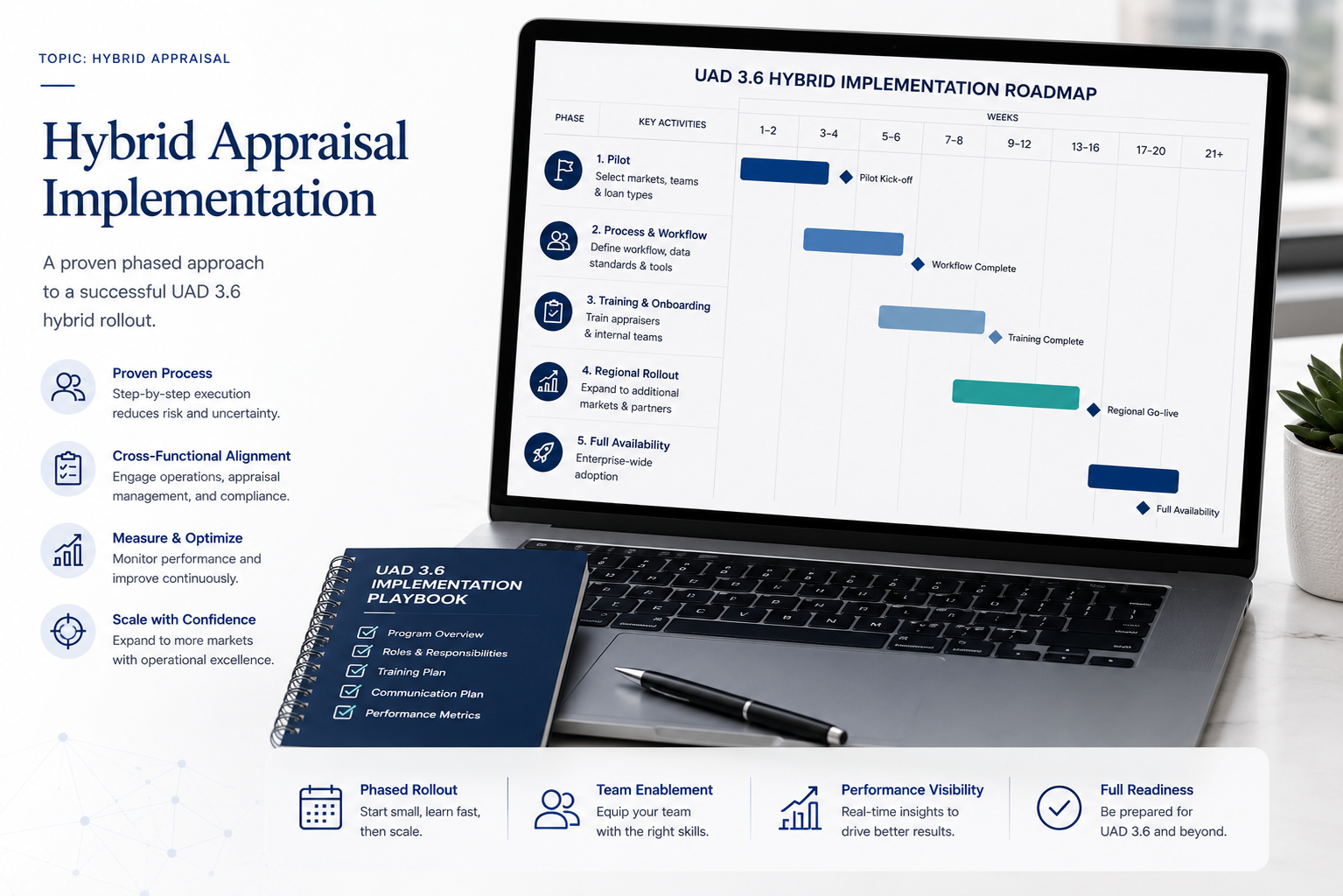
Most lenders follow a phased roll-out of UAD 3.6 hybrid appraisals, starting with a limited pilot to ensure any process issues are identified and addressed, before opening up to more regions and teams, and finally reaching full general availability.
How do I pilot and implement UAD 3.6 hybrid appraisals?
Typical implementation steps include:
- Pilot – Start with a small pilot in select branches, geographies, and loan types to test processes, vendor performance, underwriting acceptance, turn times, and costs.
- Pilot Feedback Pause – Pause after the pilot to review results, identify issues, and update policies, guidelines, and workflows before expanding.
- Phased Roll-out – Gradually expand to more branches, regions, and loan types while continuing to monitor quality, capacity, and performance.
- General Availability – Once processes and policies are established, make UAD 3.6 hybrid appraisals available across the organization as a standard collateral option.
Preparation for UAD 3.6 hybrid appraisal pilot:
Here are some of the key information to gather to prepare for a pilot:
- Executive sponsorship - identify corporate, regional or divisional leadership that are prepared to sponsor and support the pilot with their staff
- Candidate branch/team - form a dedicated pilot team, including loan officers, processors, appraisal support, underwriting, credit risk and collateral policy.
- Last 12 months pipeline - traditional appraisal orders by date, loan type, form type, state, county and zip code, fees and turn times. No address and PII should be included.
- GSE relationship team - select a GSE to include in pilot planning and monitoring, as they can share expected offer rates and eligibility by loan type and geography